
Salt Lake City Residents Directory
The Salt Lake City residents directory is your starting point for searching public records in Utah's capital and largest city. Salt Lake City sits in Salt Lake County and has about 200,000 people living within its borders. You can find police reports, court case data, property records, and vital records through city, county, and state offices. This residents directory page covers the main sources, how to search them, and what to expect when you send in a request for records in Salt Lake City.
Salt Lake City Quick Facts
Salt Lake City Police Records
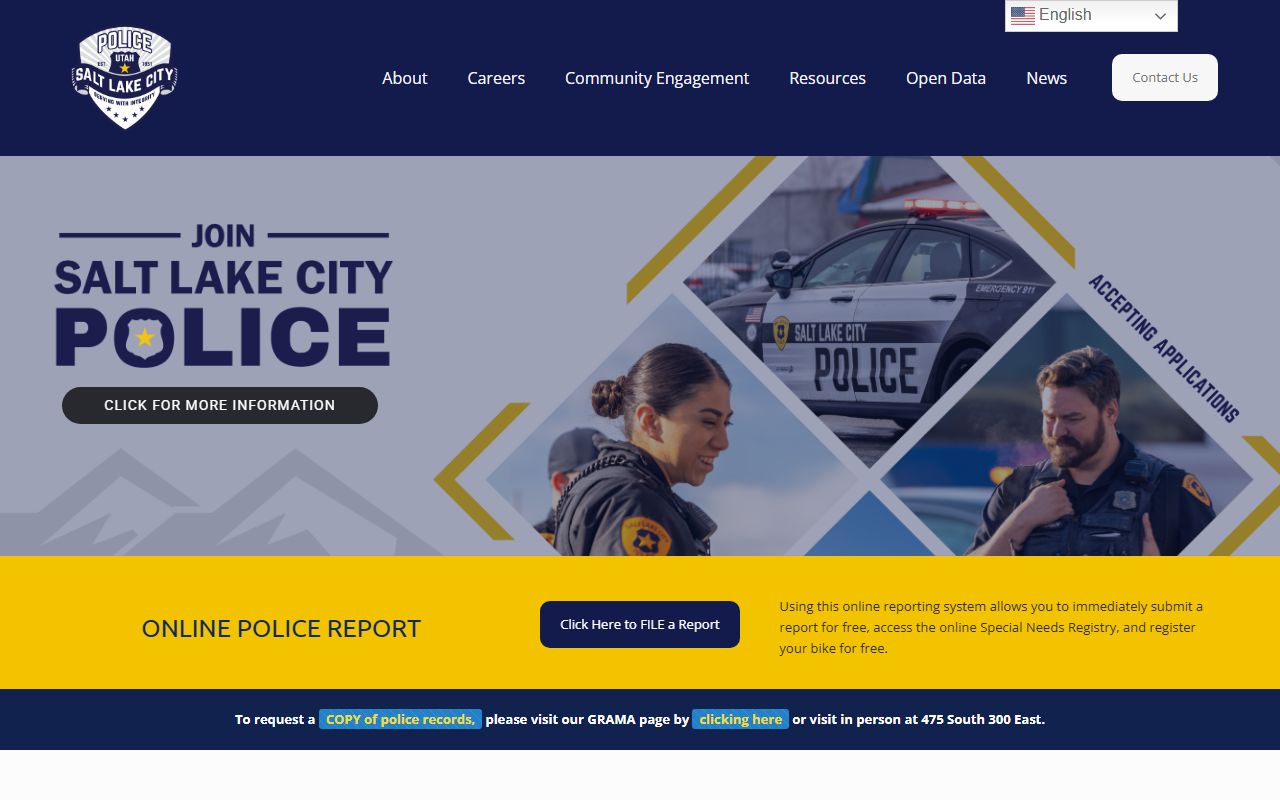
The Salt Lake City Police Department handles records requests for incidents within city limits. The department is at 475 S 300 East, Salt Lake City, UT 84111. You can call (801) 799-3000 for general questions. The records unit takes requests online, by mail, or in person during walk-in hours from Monday through Friday, 12:00 PM to 4:00 PM.
To get police records in Salt Lake City, you file a GRAMA records request through the department's online portal. GRAMA stands for Government Records Access and Management Act, which is the state law that controls how public records work in Utah under Utah Code 63G-2. The GRAMA coordinator for Salt Lake City Police is Candee Allred, who you can reach at (801) 799-3871 for questions about your request status or what records are on file.
The Salt Lake City Police Department website has details on how to submit your request and what forms you need. You will need a valid ID to pick up records in person. Accepted forms include a US driver's license, passport, or military ID. If you hold a Driver Privilege Card, you need two more forms of ID on top of that.
The standard response time is 10 business days. Media requests get a faster 5-day window. If the department needs more time, they will let you know in writing before the deadline passes.
Records Available in Salt Lake City
Salt Lake City keeps several types of records you can search through the residents directory. The police department holds chronological logs, initial contact reports, photos from cases, traffic accident reports, and body camera video. Each type has its own fee and process. Some are easy to get. Others take more steps.
Under GRAMA (Utah Code 63G-2), most records are public unless they fall under a specific exemption. Protected records include those tied to ongoing cases, juvenile matters, or certain personal details. The law splits records into public, private, controlled, and protected classes. The city must tell you which class a record falls into if they deny your request.
You can also search court records through the Utah Courts website. The Third District Court serves Salt Lake City and all of Salt Lake County. Court records include civil cases, criminal cases, family law matters, and small claims. The online case search tool is free. It shows party names, filing dates, and case status. For full documents, you contact the court clerk or go in person.
Salt Lake City Residents Directory Fees
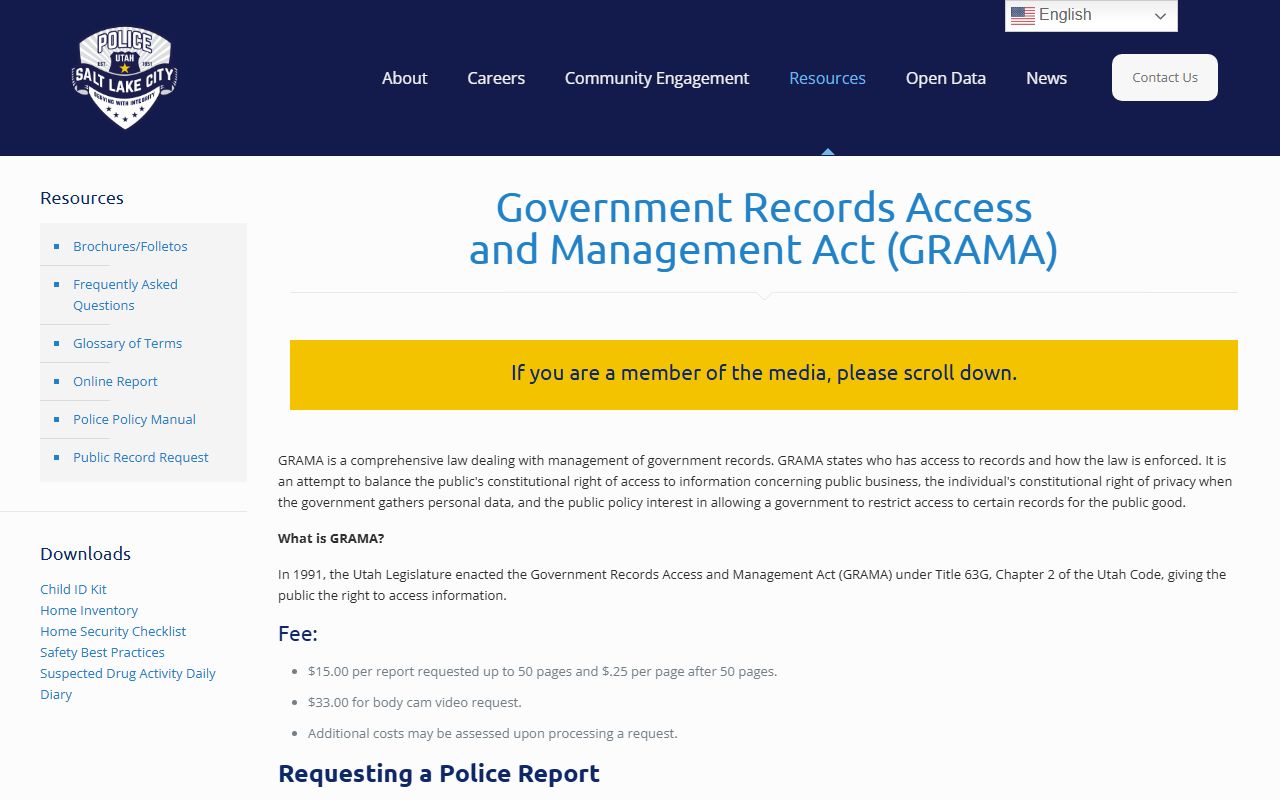
Fees for records in Salt Lake City follow the schedule set by SLC Code 2.64.130. The costs are spelled out so you know what to expect before you request something.
- Police reports: $15 for up to 50 pages, then $0.25 per extra page
- Photos from a case: $12.25 per case
- Body camera video: $33 per request
- Redaction work: $46 per hour
- Staff time beyond the first 15 minutes: $20 per hour
The fee for a police report covers most standard requests. If your request is large or needs a lot of redaction, the cost can go up fast. The department will give you an estimate before they start work on big requests. You can pay by check or money order. Call (801) 799-3871 to ask about payment options for records in Salt Lake City.
For state-level records, the Bureau of Criminal Identification charges $15 for a name-based criminal history check. The Office of Vital Records charges $25 for certified copies of birth, death, marriage, or divorce certificates. These are separate from city police records but still part of the broader Salt Lake City residents directory landscape.
How to Search Salt Lake City Records
There are a few ways to search the Salt Lake City residents directory. The method you pick depends on what type of record you need and how fast you want it.
For police records, start with the online GRAMA request form. Fill in the details of the incident or person you are looking for. Be as specific as you can with dates, names, and case numbers. The more detail you give, the faster the staff can find what you need. You will get a response within 10 business days in most cases.
For court records, go to utcourts.gov and use the case search tool. You can look up cases by name or case number. This covers the Third District Court, which handles all Salt Lake City cases. Basic case information is free to view. If you need copies of filings or orders, contact the court clerk at (801) 238-7300.
In-person visits work best when you need certified copies right away. Bring a valid photo ID. The police records office is open for walk-ins Monday through Friday from noon to 4:00 PM. The courthouse is open 8:00 AM to 4:30 PM on weekdays. Both are in downtown Salt Lake City, so you can hit both in one trip if you plan ahead.
State Records for Salt Lake City
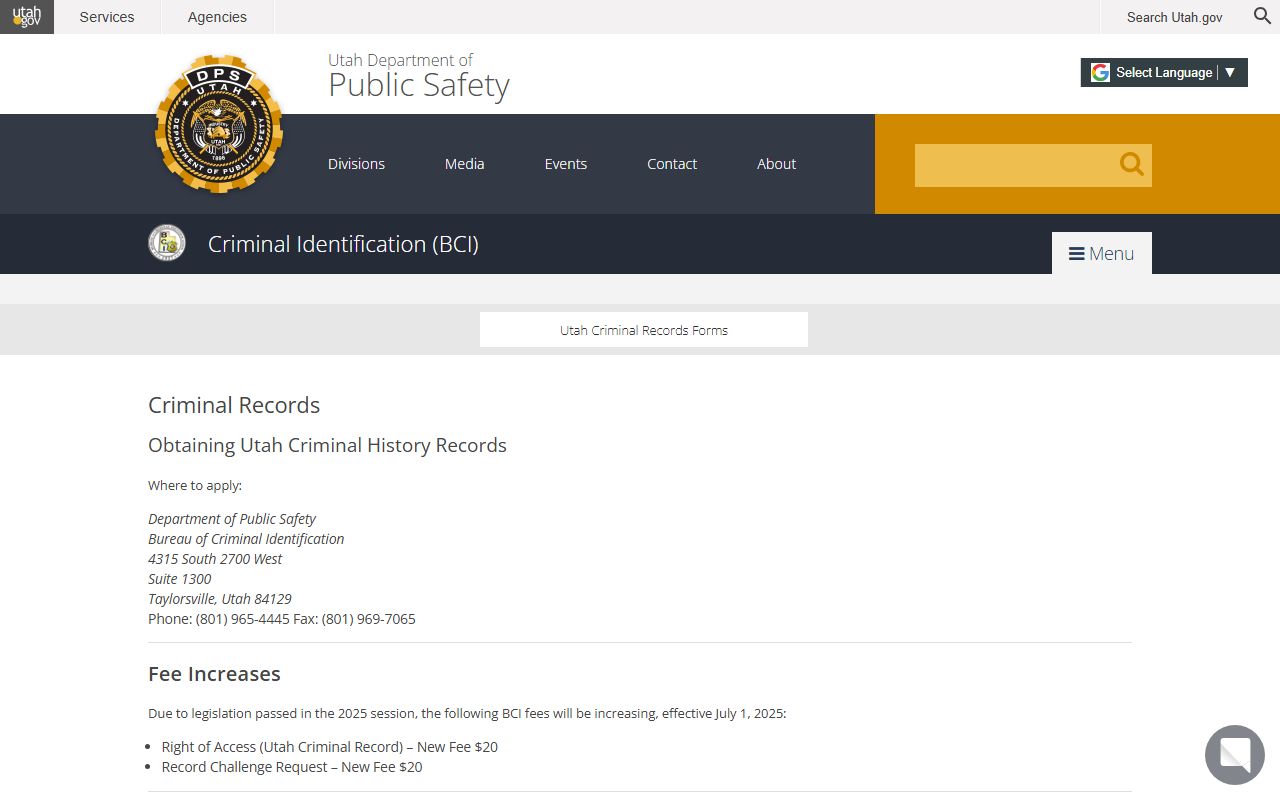
Beyond city and county offices, several state agencies hold records that cover Salt Lake City residents. The Bureau of Criminal Identification (BCI) keeps the statewide criminal history database. You can check your own record or request someone else's with a signed release. The BCI office is actually in Salt Lake City at 3888 W 5400 S, so local residents can go there in person.
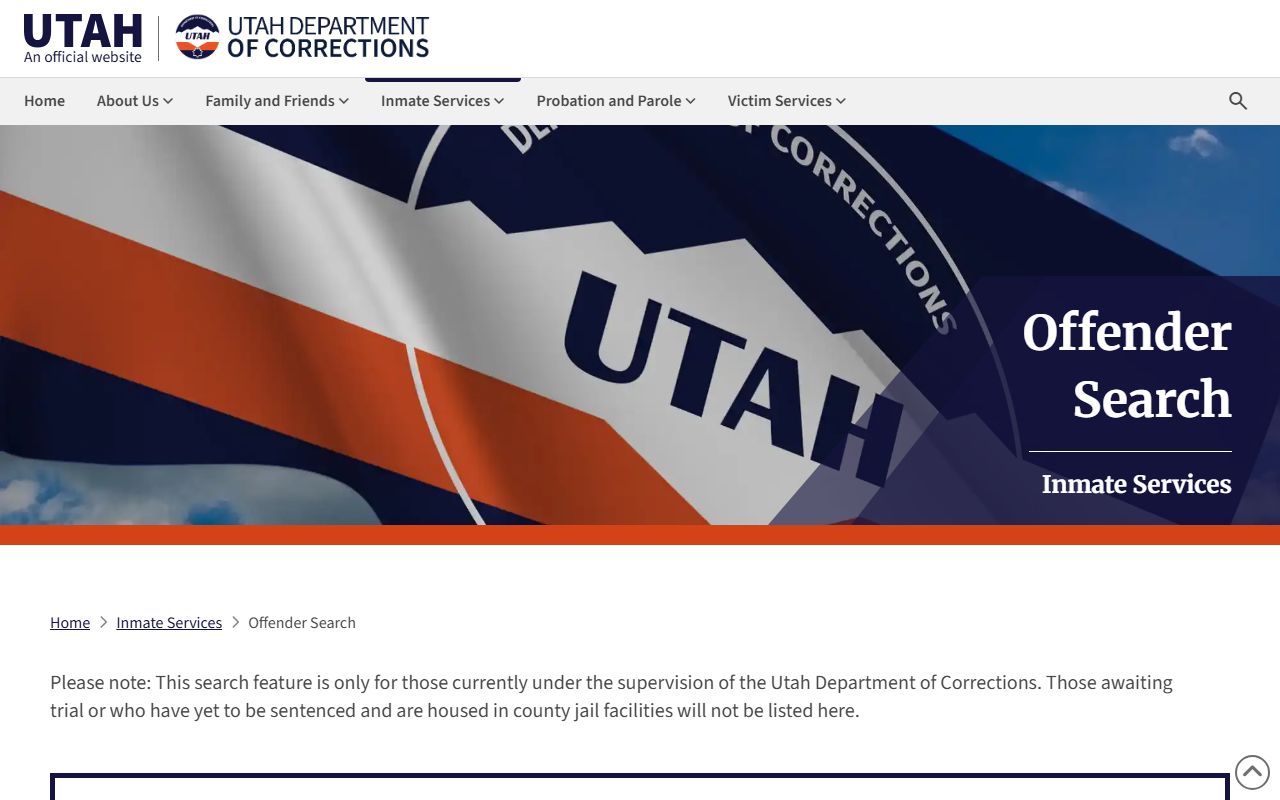
The Utah Department of Corrections runs an online offender search. This tool lets you look up people currently in state custody or on parole. It is free to use. The VINE notification system can alert you when an offender's custody status changes.
For professional licenses, the Division of Occupational and Professional Licensing (DOPL) maintains a lookup tool. You can check if someone in Salt Lake City holds a valid license for their profession. This covers doctors, contractors, real estate agents, and many other fields. The search is free and shows license status, issue date, and any disciplinary actions.
Property records for Salt Lake City sit with the Salt Lake County Recorder. You can search by owner name or address. The county assessor has tax and valuation data. Both offices are in the Salt Lake County Government Center. Online tools cover a lot of what you might need, but some older records still need an in-person visit.
Salt Lake City GRAMA Process
GRAMA is the law that controls records access across all of Utah. It applies to every city, county, and state office. In Salt Lake City, the process is straightforward. You submit a written request that describes the records you want. The city has 10 business days to respond. They can approve the request, deny it, or ask for more time.
If the city denies your request, they must tell you why and cite the specific GRAMA section that applies. You have 30 days to appeal a denial. The appeal goes to the city's chief administrative officer first. If that fails, you can take it to the State Records Committee. The full text of GRAMA is at Utah Code Title 63G, Chapter 2. It spells out your rights and the process in detail.
The Utah State Archives has guides and forms for GRAMA requests. These resources help you understand what you can ask for and how to frame your request so it gets results. Salt Lake City residents can use these templates for requests to any government office in the state.
Salt Lake County Records
Salt Lake City is the county seat of Salt Lake County. The county holds property records, tax data, court files, and sheriff department records that cover the entire county, including Salt Lake City. For a full look at what is available at the county level, check the Salt Lake County residents directory page.
Nearby Utah Cities
Other cities near Salt Lake City have their own local police departments and records offices. Select a city below to find residents directory resources for that area.